With Escape from the Planet of the Apes (1971), everything was going along as one might expect from such a film, until it ceased being bizarrely humorous and made me cry out in horror and shock. Going into it, I was already incredulous as to how it could work considering how in its predecessor in the Planet of the Apes franchise, Beneath the Planet of the Apes (1970), the future Earth where apes are the dominant species is destroyed. The solution for this plot quandary in Escape from the Planet of the Apes is to have the sympathetic talking chimpanzees go backwards in time to when their human visitors left on the space mission that made them jump forward two thousand years. Hence, you get scenes of Drs. Cornelius (Roddy McDowall) and Zira (Kim Hunter), husband and wife scientists and simians, trying on clothing from the 1970s and having their first drinks of champagne. Part of the reason I laughed at this hokeyness, it must be said, owes to the special effects make-up of that decade. Still, I am sure 20th Century Fox thought to themselves, well, people liked the first two movies, what else can we do with these monkeys (though I guess I should not use that word because they find it offensive). However, by the end, it ceases being funny in any manner. You will have to continue reading to figure out how this happens.
I was initially fooled when Escape from the Planet of the Apes began as it kicks off as the previous two have, with a shot of the water. Things are soon cleared up somewhat when we see the familiar accoutrements of the United States military moving towards the coastline, indicating we are on the present-day Earth. They have come to oversee the hauling ashore of a spaceship that has crash landed in the ocean off the coast of Los Angeles. The collected officers and soldiers are in for a shock when the astronauts that emerge from the wreck are not human, but rather Drs. Cornelius and Zira, along with another chimpanzee companion, Dr. Milo (Sal Mineo). Despite wearing clothing, they are taken as any other breed of simian and taken to the Los Angeles Zoo for treatment. Amongst themselves they have agreed to hold their speech for the moment until they can ascertain to whom it might be safe to reveal this ability, each of them having had some interaction with astronauts from this time period and knowing what society is like to a degree. Put simply, they do not want to cause a panic. It is Dr. Zira that has difficulty keeping her words in check. When animal psychologist, Dr. Lewis Dixon (Bradford Dillman) conducts a series of tests with Dr. Zira, she responds angrily when he she is offered a banana, complaining aloud that she detests the fruit. Dr. Stephanie Branton’s (Natalie Trundy) reacts to this vocalization by fainting, which summarizes the apes’ fears. Further measures are needed, too, when Dr. Milo is killed by a gorilla in a nearby cage. Drs. Cornelius and Zira become an international sensation when they go before a Presidential Commission convened to look into their arrival and intelligently answer all the questions posed by the panel. On it is Dr. Otto Hasslein (Eric Braeden), scientific advisor to the President of the United States (William Windon). Dr. Hasslein is suspicious of these newcomers from the start, though he hides it beneath a veneer of intellectual curiosity. Because of the popularity garnered by Drs. Cornelius and Zira by their public hearing, they become celebrated figures. They start wearing human clothes and stay in a swanky downtown hotel where they host parties. Dr. Cornelius goes to a boxing match with Dr. Dixon, while Dr. Zira is invited to address the women’s club. As the simians are being fêted, Dr. Hasslein wants to know more about the future, specifically about the fate of humanity. He gets Dr. Zira alone one evening, giving her some champagne (which she is told is “grape juice plus”), and getting her a little tipsy despite her pregnant condition. In this state, she talks more about a war she had mentioned earlier, one her and her husband had fled. It is enough for him to go to the president and get approval to have Drs. Cornelius and Zira taken into custody and interrogated further. When the questioning does not yield any further revelations, Dr. Hasslein orders Dr. Dixon to administer sodium pentothal, also known as truth serum, to Dr. Zira. Under the influence of the drug, she reveals how humans are enslaved in the future, and that she had conducted many experiments on them. This is enough for him to order to have all three, Drs. Cornelius, Zira, and their unborn child, murdered, again with the highest office giving his consent. Luckily, Drs. Branton and Dixon get word of this and want to help. This is made more complicated when Dr. Cornelius accidentally kills an orderly when he and his wife preemptively attempt an escape. The precariousness of their situation is turned up a notch when she goes into labor. For the time being, Drs. Branton and Dixon are able to hide the chimpanzees with a circus, but it does not take Dr. Hasslein long to figure out where they have gone. Instead, the simians are told to hide in a derelict freighter, although again they are discovered when Dr. Zira leaves behind a bag in her exhaustion that leads to their discovery. Dr. Hasslein goes to this location on his own, intending to take matters into his own hands (for some reason). Though he tries to hide from the authorities when they get to the scene, presumably at Dr. Dixon’s behest, he ends up finding Dr. Zira and her child first, shooting them to death before he, too, is killed. A horrified Dr. Cornelius is gunned down, too. Evidently, this was too tragic of an ending for the last thing we see is a baby chimpanzee at the zoo beginning to say the word “Mama.”
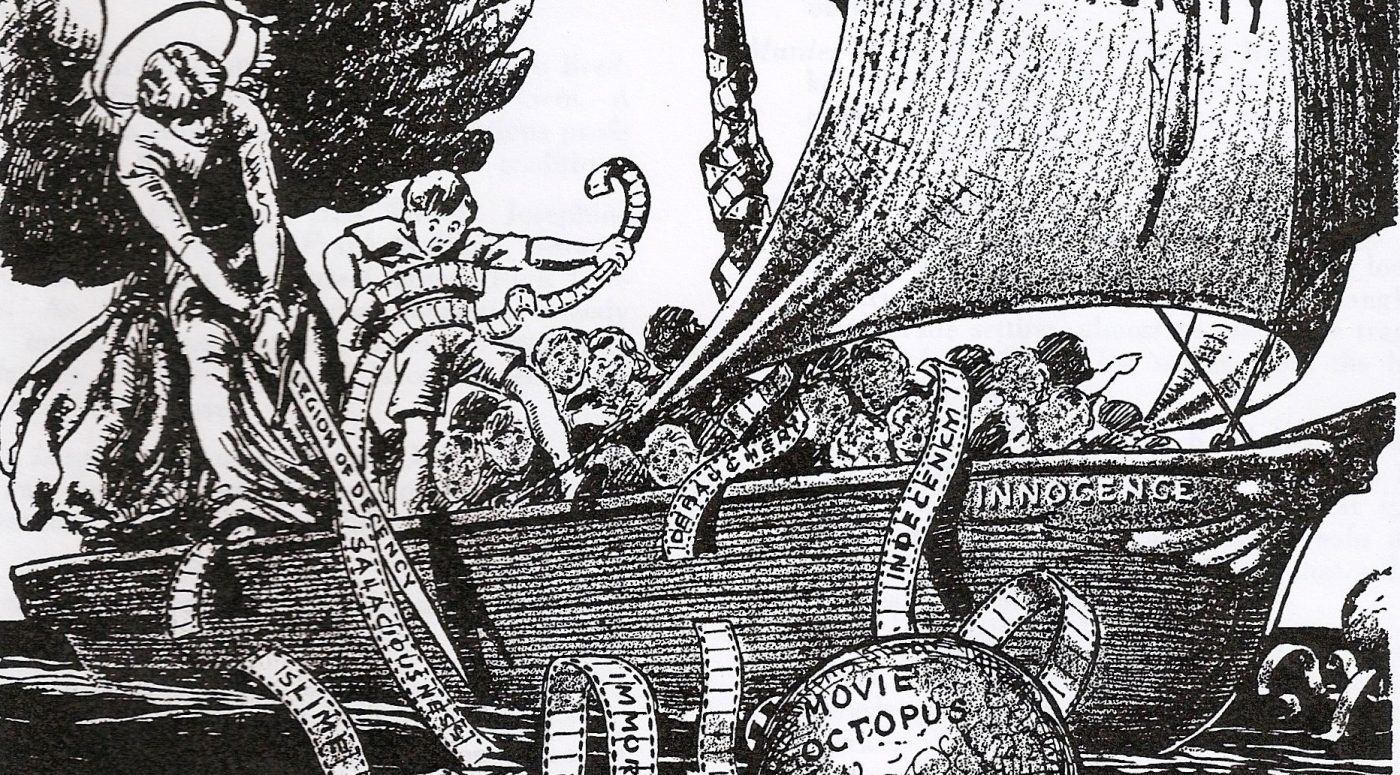
Since you know that I am a practicing Catholic, I am sure you can guess from the synopsis in the last paragraph the moment at which I cried out in disgust. Even though they covered it up, I was saddened to see a child being shot to death. Like I said in the introduction, most of this is silly, but it does have some interesting Catholic undertones. I know I have asserted this before, but in light of the fact that they included a priest on the presidential commission, I would like to re-assert that the Church is not anti-evolution. Though he has few lines, his presence is meant to elicit thoughts of established tradition that the appearance of talking chimpanzees would supposedly upset. It is nonsense, but such are the ubiquitous nature of stereotypes, and why The Legionnaire still has a job to do. What I can appreciate more is the solidly pro-life message in the film. The child growing inside of Dr. Zira is spoken about as the person it is, by antagonist and protagonist alike. For Dr. Hasslein, this is a problem, and he is the one who orders it and its parents killed. While the evilness of his decision is not put in specifically religious terms, they are still interesting in that context in another way. His goal is to prevent the awful future spoken of by Dr. Zira. Still, he admits that he has no way of knowing if it would actually work, making his actions even more arbitrary and awful. The president momentarily counters this by saying that those in the future have a right to exist. This, too, feeds back into a pro-life stance. As for supposedly having the power to determine the future, that is something that is out of our hands. It is something that only God can know, and we have to trust in His providence.
The final piece of the Catholic puzzle in Escape from the Planet of the Apes is when the leader of the circus, Armando (Ricardo Montalbán) gives Drs. Cornelius and Zira’s child a St. Francis of Assisi medal. Plot wise, this works because it identifies their offspring as being alive at the end. The other had been one Dr. Zira had swapped with a chimpanzee in the circus. It is ultimately the wrong message, though, because whatever these apes are, they are not animals with St. Francis as their patron. In short, while I liked the Catholic moments, there is no reason to watch this movie.
 The Legionnaire