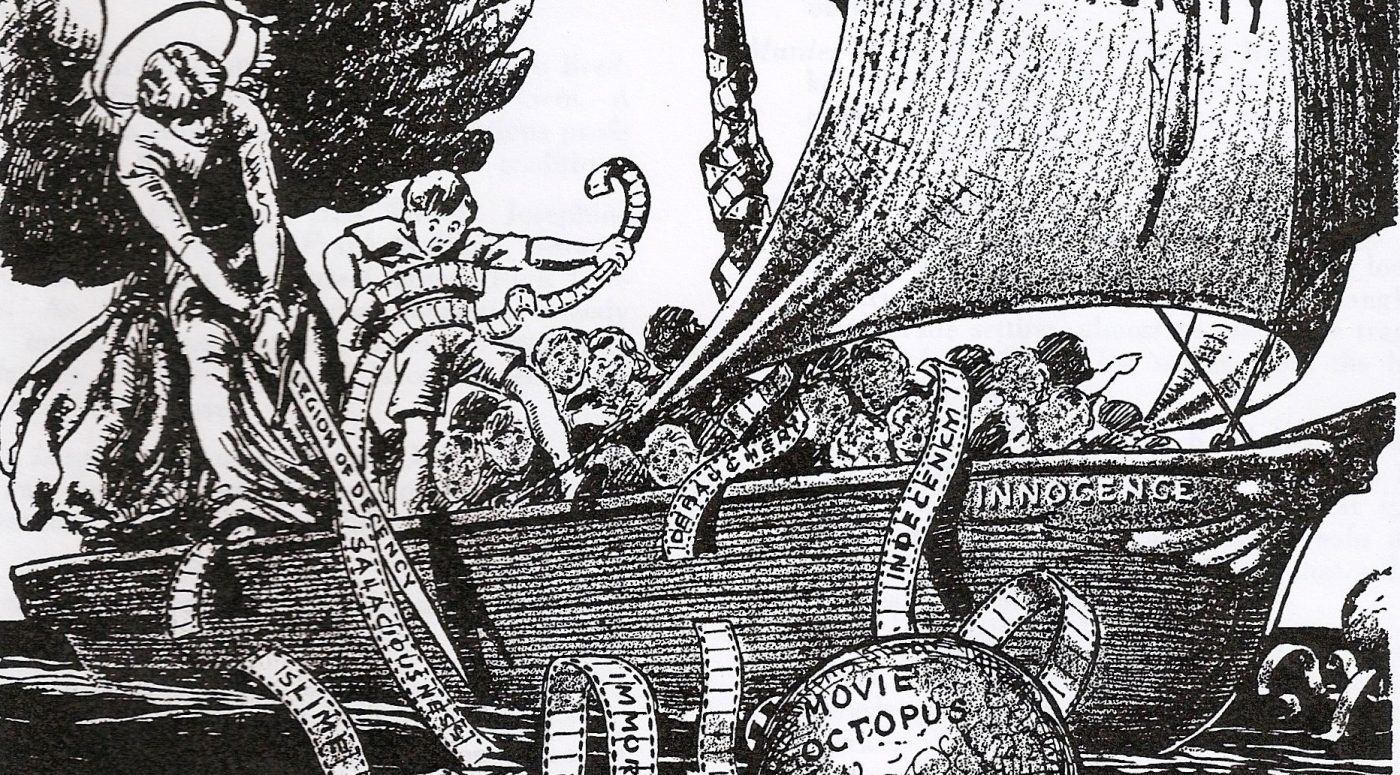
Despite my adherence to my Catholic Faith, I do think the interference of the Church in film production during the mid-twentieth century was more of a problem than a benefit. It is something I wrote about in graduate school, and discussed in other reviews. While I feel that moviemakers have a moral obligation to make material that will not be damaging to the soul, enforcing such beliefs is up to the individual, not a government. What I am speaking to are the Production Codes, originally written by Jesuit priest Father Daniel Lord, which were adopted by all major Hollywood studios. This did not have the weight of law behind it, but it functioned as a sort of bloc that prevented a film’s distribution if its guidelines were ignored. Things like miscegenation, nudity, and overt violence were all curtailed by these rules. To show you how this worked, I give you today’s review of Laura (1944). It is a sordid affair, but had it been made today, it would have looked a lot different. Again, I prefer for artists to have the freedom to display their vision. Like Faith, it is my prayer that they choose to do things like they did in 1944.
Speaking of sordid, Laura begins with the murder of the eponymous character, Laura Hunt (Gene Tierney). She had been a rising socialite, and her death comes as a shock to many. The case seems to have been passed between a number of policemen before landing on the desk of Detective Mark McPherson (Dana Andrews). The first person he looks into is well-known newspaper columnist and writer Waldo Lydecker (Clifton Webb). Waldo greets Detective McPherson from his bathtub and they talk about the particulars of the investigation to this point. Waldo is sure of himself, though Detective McPherson admits that the journalist is a suspect. Despite the suspicion, Waldo offers to accompany Detective McPherson out of a personal interest in the idea of the crime. Detective McPherson has no objections, and together they visit the next potential perpetrator on the list, Shelby Carpenter (Vincent Price). Immediately, one can tell that there is some tension between Shelby and Waldo, clearly being rivals for Laura’s affections. Shelby is helpful, but his explanations of his actions and motives on the day of the crime do not make him look entirely innocent. As such, Detective McPherson decides to bring Shelby along to the scene of the crime in order to look for items that only this former fiancé would know about as to their location. Again, Shelby’s movement around the apartment appear fishy. After this, Detective McPherson and Waldo take in a meal during which Waldo details the particulars of this seeming love triangle. It started five years previously when the up-and-coming advertising executive Laura approaches Waldo at lunch in order to get the writer to endorse a fountain pen brand. His usual haughty attitude tells her off, but he feels guilty over this treatment. He then goes to her office to apologize. So impressed is she with this reversal that she agrees to go out with him. It becomes a steady thing, and she benefits from him introducing her to many high society members. This advances her career in advertising, bringing her many new friends. Waldo is open about his jealousies regarding Laura, chasing off other potential suitors, including the painter of a portrait she prominently hangs in her living room. He is not so successful when she is introduced to Shelby. Before Waldo can do anything, Laura informs him that she is engaged to Shelby. Still, he manages to muddy the waters by producing evidence that not only has Shelby been unfaithful to her, but that the newcomer is a petty criminal. Once Waldo finishes delivering this background, Detective McPherson returns to Laura’s abode in order to look for more clues as to who might be inclined to kill her. The following day, Waldo makes a visit, accusing Detective McPherson of falling in love with her painting. The cop dismisses this suggestion and keeps on with his research. Later, he falls asleep in her chair, only to be awakened by Laura coming through the front door. At first, he believes he is dreaming, and so did I, for a moment. When he accepts this crazy reality, a few things become apparent. Obviously, the person killed in her entrance was someone else. This turns out to be Diane Redfern (not pictured), a model used by Laura’s agency with whom Shelby had a dalliance. Hence, though Laura had previously been taken as a corpse, she has now become a suspect. Wanting to keep her reappearance a secret to the others Detective McPherson is investigating, he orders her to stay home and contact no one. Instead, she phones Shelby, who comes to her home for a brief meeting. Detective McPherson then follows Shelby to Laura’s country cottage, catching him putting a shotgun, the determined type of murder weapon, back on the wall. Shelby explains this away, too, and they return to the city. Meanwhile, Detective McPherson has decided to reveal the fact that she is alive to the world. The last of these is Waldo, who faints when he sees her still breathing. Yet, Detective McPherson is no closer to catching the killer, though he has his hunches. To play them out, he decides to have a little party in Laura’s apartment, gauging everyone’s reaction. At the end of the soiree, he arrests the hostess. Again, this is a ruse in order to reveal the nature of her feelings for Shelby, which are lukewarm. This essentially leaves Waldo. One last look at the writer’s premises leads him back to a clock, which is a match to one owned by Laura. Detective McPherson finds a hidden compartment in it, making it the perfect place to hide the murder weapon. This he uncovers in Laura’s copy. Leaving her to go find the killer, Waldo sneaks in through a side door, retrieves the shotgun, and is about to finish what he thought he had already accomplished. Luckily, Detective McPherson figures out what is going on and saves Laura before a tragedy can occur.
Based on my synopsis of Laura, can you see how a modern filmmaker would treat this material? I could be making baseless assumptions, but my guess is that it would be a much shadier movie. Further, I would not be surprised if Laura was made into a femme fatale whose womanly wiles would drive men mad. Thankfully, that is not how she is depicted. Indeed, she has a Christ-like approach towards most of the people in her life, forgiving their faults no matter how many times they commit them. This is extended to everyone, including her maid, Bessie Clary (Dorothy Adams). Such is Laura’s renown for her kindness that Bessie claims that she would work for her employer for free. Christians are taught not to seek such recognition, but it is nice to be honored in this manner when we put in the effort. Laura’s magnanimity even extends to Waldo after he attempts to murder her. Upon Detective McPherson gaining entrance to the apartment, he and another officer shoot and kill Waldo before he can get off another shot at Laura. As Waldo lies dying, she takes pity on him. This aligns with Matthew 18:21-22 when Jesus informs His disciples as to how many times they should accept the apologies of those who wrong them. Jesus gives them a number of seventy-seven, which is not meant to be the total number of instances in which you let an affrontery slide. Instead, it is intended to convey the notion that it should be as many times as it takes to achieve some kind of reconciliation. Relationships can, and usually do, look differently after this is achieved. Regardless, it is part of the healing that God wants for all of us.
If you are in the mood for a murder mystery without the blood and guts you see in modern renditions of such tales, watch Laura. These kinds of stories are unfortunate as they typically involve someone dying. Yet, they can also get you thinking, and there is nothing wrong with brain activity, usually. Either way, this one gets my recommendation.

